Showing posts with label Mayor. Show all posts
Showing posts with label Mayor. Show all posts
Friday, January 8, 2021
About Mayor Lori E. Lightfoot
Since assuming office following her historic election, Mayor Lightfoot has undertaken an ambitious agenda of expanding opportunity and inclusive economic growth across Chicago’s neighborhoods and communities,

Tuesday, June 28, 2016
Mayor of London

Born in London to a working-class British Pakistani family, Khan gained a degree in Law from the University of North London. He subsequently worked as a solicitor specialising in human rights, and chaired Liberty for three years. Joining Labour, Khan was a Councillor for the London Borough of Wandsworth from 1994 to 2006 before being elected MP for Tooting in 2005. Under the Labour government of Prime Minister Gordon Brown he was appointed Minister of State for Communities in 2008, later becoming Minister of State for Transport. A key ally of Labour leader Ed Miliband, he served in Miliband's Shadow Cabinet as Shadow Secretary of State for Justice, Shadow Lord Chancellor, and Shadow Minister for London.

Khan was elected Mayor of London in the 2016 mayoral election, succeeding Conservative Party Mayor Boris Johnson. He resigned as MP for Tooting on 9 May 2016. His election as Mayor of London made him the city's first ethnic minority mayor, and the first Muslim to become mayor of a major Western capital. Khan held the largest personal mandate of any politician in the history of the United Kingdom, and the third largest personal mandate in Europe.
In the build up to the referendum on the UK's continuing membership of the European Union (EU), Khan was a vocal supporter of the 'Remain' camp. He agreed to attend a Britain Stronger in Europe campaign event with the Conservative Prime Minister David Cameron in order to demonstrate cross-party support for remaining within the EU, for which he was criticised by Labour Shadow Chancellor John McDonnell, who claimed that sharing a platform with the Conservatives "discredits us".After the murder of MP Jo Cox during the campaign, Khan called for the country to "pause and reflect" on the manner in which the Leave and Remain camps had been approaching the debate, stating that it had been marred by a "climate of hatred, of poison, of negativity, of cynicism". Following the success of the 'Leave' vote, Khan insisted that all EU citizens living in London were welcome in the city and that he was grateful for the contribution that they made to it.
While fasting for the Islamic holy month of Ramadan in 2016, Khan declared that he would use the period as an opportunity to help "break down the mystique and suspicion" surrounding Islam in Britain and help to "get out there and build bridges" between communities, organising iftars to be held at synagogues, churches, and mosques. Following the 2016 Orlando nightclub shooting, Khan attended a vigil in Old Compton Street, Soho, and insisted that he would "will do everything in my power to ensure that LGBT Londoners feel safe in every part of our city"; later that month he marched in the LGBT Pride London parade.
On transport, Khan immediately announced the introduction of a "Hopper" bus ticket which would allow a passenger to take two bus journeys within an hour for the price of one; it was intended to benefit those on low incomes most. In June, Khan announced that his electoral pledge to prevent transport fare rises would only apply to "single fares" and pay as you go fares, and not daily, monthly, weekly, or yearly railcards; he was widely criticised for this, including by the Liberal Democrat Caroline Pidgeon, who accused him of having broken his promise. In June 2016 he ordered TfL to ban any advertising on its network that was deemed to engage in body shaming and the demeaning of women.
In his first weeks as Mayor, Khan criticised foreign investors for treating homes in London as "gold bricks for investment", instead urging them to invest in the construction of "affordable homes" for Londoners through a new agency, Homes for Londoners, which would be funded by both public and private money. However, in contrast to a pre-election statement, he revealed that he no longer supported rent freezes in the city. Insisting that he would "oppose building on the Green Belt, which is now even more important than when it was created", Khan vetoed the construction of a football stadium and two blocks of flats on Green Belt land in Chislehurst, after the plan had already been supported by Bromley Council.
Khan married Saadiya Ahmed, a fellow solicitor, in 1994 and has two daughters, Anisah (born 1999) and Ammarah (born 2001). Khan also served as Chairman of the Fabian Society,[90] remaining on its Executive Committee. In 2009 he won the Jenny Jeger Award (Best Fabian Pamphlet) for his writing "Fairness not Favours: How to re-connect with British Muslims". He also edited the Fabian Essay Collection Our London: the Capital beyond 2015.
Khan is a Sunni Muslim. He regularly attends Al-Muzzammil Mosque in Tooting.
London
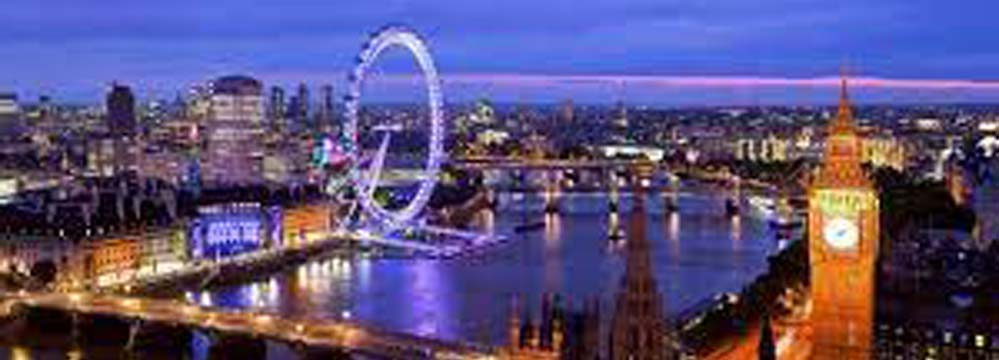
London, is the capital and most populous city of England, Great Britain, and the United Kingdom. On the River Thames in the south east of the island of Great Britain, London has been a major settlement for two millennia. It was founded by the Romans, who named it Londinium. London's ancient core, the City of London, largely retains its 1.12-square-mile (2.9 km2) medieval boundaries. Since at least the 19th century, "London" has also referred to the metropolis around this core, which now forms the county of Greater London governed by the Mayor of London and the London Assembly, historically split between Middlesex, Essex, Surrey, Kent, and Hertfordshire.
London is a leading global city, in the arts, commerce, education, entertainment, fashion, finance, healthcare, media, professional services, research and development, tourism, and transport. It is one of the world's leading financial centres and has the fifth-or sixth-largest metropolitan area GDP in the world. London is a world cultural capital. It is the world's most-visited city as measured by international arrivals and has the world's largest city airport system measured by passenger traffic. London is one of the world's leading investment destinations, hosting more international retailers and ultra high-net-worth individuals than any other city. London's universities form the largest concentration of higher education institutes in Europe, and a 2014 report placed it first in the world university rankings. According to the report London also ranks first in the world in software, multimedia development and design, and shares first position in technology readiness. In 2012, London became the first city to host the modern Summer Olympic Games three times.
London has a diverse range of peoples and cultures, and more than 300 languages are spoken within Greater London. Its estimated mid-2015 population was 8,673,713, the largest of any city in the European Union,[ and accounting for 12.5 per cent of the UK population. London's urban area is the second most populous in the EU, after Paris, with 9,787,426 inhabitants at the 2011 census.The city's metropolitan area is one of the most populous in Europe with 13,879,757 inhabitants, while the Greater London Authority states the population of the city-region (covering a large part of the south east) as 22.7 million.London was the world's most populous city from around 1831 to 1925.
London contains four World Heritage Sites: the Tower of London; Kew Gardens; the site comprising the Palace of Westminster, Westminster Abbey, and St Margaret's Church; and the historic settlement of Greenwich (in which the Royal Observatory, Greenwich marks the Prime Meridian, 0° longitude, and GMT).Other famous landmarks include Buckingham Palace, the London Eye, Piccadilly Circus, St Paul's Cathedral, Tower Bridge, Trafalgar Square, and The Shard. London is home to numerous museums, galleries, libraries, sporting events and other cultural institutions, including the British Museum, National Gallery, Tate Modern, British Library and West End theatres. The London Underground is the oldest underground railway network in the world.
Mayor of Birmingham

Carl left school aged 16 in 1972 and followed his sisters in attending Kidderminster College where he gained two A levels – both in Government & Politics. He started work with British Rail at Kidderminster Station in 1974 before moving to the Birmingham Divisional office in 1975.
In 1978 Carl went to night school at Matthew Boulton College to gain an additional A level in History and left British Rail in 1979 to attend Coventry Polytechnic. It was at this time that he moved to Birmingham to live in York Road, Edgbaston.
After graduating with a degree in Modern Studies (politics & history) he spent a year volunteering before doing a postgraduate degree at Warwick University. He graduated with an MA in Industrial Relations in 1984 and spent a few months running the newly opened photography galley at the Triangle Arts Centre at Aston University. It was during his time at Warwick University that he married Deed Curry whom he had met in 1978. Carl & Deed have two children – Joseph & Julia.
He began work with the West Midlands Low Pay Unit in 1985 becoming its Director in 1988. Carl quickly established himself as a regular contributor to the local media as a spokesperson on employment and poverty related issues. He joined Walsall Citizens Advice Bureau in 1996 as Chief Executive and will complete 20 years’ service when his term of office as Lord Mayor begins.
Carl joined the Labour Party in 1981 and was elected Councillor for Ladywood Ward in May 1987. He has held many roles in his 29 years as a Councillor – most notably Chair of Leisure Services, Ladywood District Committee, Thinktank & the main Overview & Scrutiny Committee.
During his year as Lord Mayor, Councillor Rice hopes to highlight the work of the voluntary sector in Birmingham and wants to celebrate the role of women in making Birmingham a great City. Carl is excited about launching the new look Lord Mayor’s Charity which seeks to create a source of funding for local voluntary agencies and community groups.
Leisure - Carl is a passionate hill walker and at the time of his appointment has climbed 211 of the 282 Munro’s (mountains over 3,000 feet in height) in Scotland. He walks on average 1,000 miles each year throughout all parts of the United Kingdom. He has recently ventured farther afield – walking in the Dolomites and the French Alps.
Birmingham
Birmingham, is a major city and metropolitan borough in the West Midlands of England. It is the largest and most populous British city outside London, with a population in 2014 of 1,101,360. The city is in the West Midlands Built-up Area, the third most populous urban area in the United Kingdom, with a population of 2,440,986 at the 2011 census. Birmingham is the second most populous metropolitan area in the UK with a population of 3.8 million. This also makes Birmingham the 9th most populous metropolitan area in Europe.
A medium-sized market town in the medieval period, Birmingham grew to international prominence in the 18th century at the heart of the Midlands Enlightenment and subsequent Industrial Revolution, which saw the town at the forefront of worldwide advances in science, technology and economic development, producing a series of innovations that laid many of the foundations of modern industrial society.By 1791 it was being hailed as "the first manufacturing town in the world". Birmingham's distinctive economic profile, with thousands of small workshops practising a wide variety of specialised and highly skilled trades, encouraged exceptional levels of creativity and innovation and provided a diverse and resilient economic base for industrial prosperity that was to last into the final quarter of the 20th century. Perhaps the most important invention in British history, the industrial steam engine, was invented in Birmingham. Its resulting high level of social mobility also fostered a culture of broad-based political radicalism, that under leaders from Thomas Attwood to Joseph Chamberlain was to give it a political influence unparalleled in Britain outside London, and a pivotal role in the development of British democracy. From the summer of 1940 to the spring of 1943, Birmingham was bombed heavily by the German Luftwaffe in what is known as the Birmingham Blitz. The damage done to the city's infrastructure, in addition to a deliberate policy of demolition and new building by planners, led to extensive demolition and redevelopment in subsequent decades.
Today Birmingham's economy is dominated by the service sector. The city is a major international commercial centre, ranked as a beta− world city by the Globalization and World Cities Research Network; and an important transport, retail, events and conference hub. Its metropolitan economy is the second largest in the United Kingdom with a GDP of $121.1bn (2014),and its six universities make it the largest centre of higher education in the country outside London. Birmingham's major cultural institutions – including the City of Birmingham Symphony Orchestra, the Birmingham Royal Ballet, the Birmingham Repertory Theatre, the Library of Birmingham and the Barber Institute of Fine Arts – enjoy international reputations, and the city has vibrant and influential grassroots art, music, literary and culinary scenes. Birmingham is the fourth-most visited city in the UK by foreign visitors.
Birmingham's sporting heritage can be felt worldwide, with the concept of the Football League and lawn tennis both originating from the city. Its most successful football club Aston Villa has won seven league titles and one European Cup with the other professional club being Birmingham City.
People from Birmingham are called Brummies, a term derived from the city's nickname of Brum. This originates from the city's dialect name, Brummagem, which may in turn have been derived from one of the city's earlier names, Bromwicham. There is a distinctive Brummie accent and dialect.
Mayor of Leeds

A lifelong Leeds Utd fan, Coun Harper joked that he would like to bring some luck for Leeds United in his mayoral year.
And he told the packed chamber and public gallery that he was looking forward to many events, singling out the city’s centenary commemorations for the Battle of the Somme later this year.
Taking over the role from the previous incumbent Judith Chapman, Coun Harper is the 123rd person to hold the prestigious office.
Born in Belfast, he moved with his family to the Harehills area of Leeds in 1967, and currently lives in Otley.
He began his working life in the city’s historic Leeds Kirkgate Market, before taking positions at Montague Burton in Leeds and Archbold Storage Ltd, Gildersome.
In 1978 he trained as a central heating surveyor at British Gas in Wortley, and remained in the job until he was elected as a Labour councillor in the then University ward of the city in 1994.
Councillor Harper said: “It is an unbelievable honour and privilege to be elected as the new Lord Mayor of Leeds.
“Having arrived in Leeds from Belfast with my family as a young boy, I never imagined that one day I would have the opportunity to represent our truly amazing city in such a way.
“Both I and the Lady Mayoress cannot wait for our engagements to start so we can begin to meet the fantastic people of our city.”
Council leader Judith Blake said Coun Harper had been a “great servant already for Leeds public life” during two stints as a councillor and wished him luck over the busy coming months.
She said he had been a “champion for Kirkgate market”, where he had his first job aged just 14 and is currently chair of the board.
She added he had “always been a fearless, tireless and passionate campaigner, always standing up for Leeds as a whole.”
Father of three Coun Harper will be joined by his partner Lynne Scholes as his consort.
His chosen Mayoral charities will be Epilepsy Action and Yorkshire Heart Research, the former being especially close to his heart as he suffers from epilepsy himself.
Meanwhile new cabinet arrangements for the coming year were also rubber-stamped last night, and there were a few surprises.
The biggest change saw long-serving environment and community safety portfolio holder Coun Mark Dobson losing his place on the executive board.
His brief will now be taken over by deputy leader Lucinda Yeadon - who retains her number two role alongside co-deputy James Lewis.
Cabinet newcomer Rebecca Charlwood - formerly Labour’s chief whip - is named executive member for health, wellbeing and adults, while Lisa Mulherin, the previous holder of that portfolio, moves into the Children and Families role.
The other cabinet positions remain as they were, but it means that of the eight positions at Leeds City Council’s top table, five are now occupied by women.
Leeds
Leeds, is a city in West Yorkshire, England. Historically in Yorkshire's West Riding, the history of Leeds can be traced to the 5th century when the name referred to a wooded area of the Kingdom of Elmet. The name has been applied to many administrative entities over the centuries. It changed from being the appellation of a small manorial borough in the 13th century, through several incarnations, to being the name attached to the present metropolitan borough. In the 17th and 18th centuries Leeds became a major centre for the production and trading of wool. Then, during the Industrial Revolution, Leeds developed into a major mill town; wool was the dominant industry but flax, engineering, iron foundries, printing, and other industries were important. From being a compact market town in the valley of the River Aire in the 16th century Leeds expanded and absorbed the surrounding villages to become a populous urban centre by the mid-20th century. The main built-up area sub-division has a population of 474,632 (2011), and the City of Leeds metropolitan borough of which it is a part which has an estimated population of 757,700 (2011).
Today, Leeds is ranked as a gamma world city by the Globalization and World Cities Research Network; and is considered the cultural, financial and commercial heart of the West Yorkshire Urban Area. Leeds is served by four universities, and has the fourth largest student population in the country and has the country's fourth largest urban economy. After London, Leeds is the largest legal centre in the UK, and in 2011 its financial and insurance services industry was worth £2.1 billion, the 4th largest in the UK, with over 30 national and international banks located in the city. It is the leading UK city for telephone delivered banking and related financial services, with over 30 call centres employing around 20,000 people.
Outside of London, Leeds has the third busiest railway station and sixteenth busiest airport in terms of passenger numbers in England. Public transport, rail and road communications networks in the region are focused on Leeds and there are a number of twinning arrangements with towns and cities in other countries. Its assigned role in the Leeds City Region partnership recognises the city's importance to regional economic development, and the second phase of High Speed 2 plans to connect Leeds to London via East Midlands Hub and Sheffield Meadowhall.
Mayor of Glasgow

Doty earned 2,343 votes, or 57 percent, to Trautman’s 1,788 and 43 percent.
Doty watched vote totals come in via a Glasgow Electric Plant Board television broadcast from WCLU Radio at his home, where he was joined by friends and family.
“I’m extremely excited and very honored that the people have put their confidence in me,” he said when the result was known. “I’m ready to get to work.”
Trautman, while obviously disappointed in the outcome, expressed appreciation “for all who supported me and have supported me over the last four years.”
Trautman said she doesn’t know whether she would consider seeking the mayor’s position in the future.
“There’s other opportunities out there and I will be looking at those,” she said. “Again, I’m just very happy for the support that I received.”
Trautman plans to remain involved locally.
“I don’t see myself stepping out of that completely,” she said. “So I will be here and working with the community.”
Among the first things Doty plans to do when he takes office in January is tto create a comprehensive plan for the community.
“First, we need to, again as we said after the primary, we’ve got to put behind those things that continue to divide us,” he said. “We’ve got to come back together as a community and move forward. Get those issues put to bed so that leaders can lead.”
Doty said he enjoyed the experience of running for the office.
“I think it’s been a great campaign,” he said. “You’ve seen I’ve had a great team here who has been doing a tremendous amount of work.
“It’s been a positive campaign. I’m thankful it stayed that way the whole time. We put in a whole of hard work, but she did as well, so I think it’s been good in both respects.”
Doty said there will be changes once he takes office.
“We’ve got to get some good strong leadership from the mayor’s office down and throughout the (Glasgow Police Department),” he said.
Meanwhile, nine Glasgow City Council incumbents will serve another two-year term: Joe Trigg, Shelia Oliver, Stacy Norman Hammer, James “Happy” Neal, Freddie Norris, Wendell Honeycutt, Marlin Witcher, Karalee Pelham Oldenkamp and Brad Groce.
Joining them on the city council in January will be newcomers John “Jake” Dickinson, Ben Bucher and Chasity Veach-Lowery.
Glasgow
Glasgow, is the largest city in Scotland, and the third largest in the United Kingdom (after London and Birmingham). Historically part ofLanarkshire, it is now one of the 32 Council Areas of Scotland. It is situated on the River Clyde in the country's West Central Lowlands. Inhabitants of the city are often referred to as Glaswegians.
Glasgow grew from a small rural settlement on the River Clyde to become the largest seaport in Britain. Expanding from the medievalbishopric and royal burgh, and the later establishment of the University of Glasgow in the 15th century, it became a major centre of the Scottish Enlightenment in the 18th century. From the 18th century the city also grew as one of Great Britain's main hubs of transatlantic trade with North America and the West Indies.
With the onset of the Industrial Revolution, the population and economy of Glasgow and the surrounding region expanded rapidly to become one of the world's pre-eminent centres of chemicals, textiles and engineering; most notably in the shipbuilding and marine engineeringindustry, which produced many innovative and famous vessels. Glasgow was the "Second City of the British Empire" for much of the Victorian eraand Edwardian period, although many cities argue the title was theirs.
In the late 19th and early 20th centuries Glasgow grew in population, reaching a peak of 1,128,473 in 1939. Comprehensive urban renewalprojects in the 1960s, resulting in large-scale relocation of people to new towns and peripheral suburbs, followed by successive boundary changes, reduced the population of the City of Glasgow council area to 599,650 with 1,209,143 people living in the Greater Glasgow urban area. The entire region surrounding the conurbation covers about 2.3 million people, 41% of Scotland's population. At the 2011 census, Glasgow had a population density of 8,790/sq mi (3,390/km2), the highest of any Scottish city.
Glasgow hosted the 2014 Commonwealth Games. Glasgow is also well known in the sporting world for the football rivalry of the Old Firmbetween Celtic and Rangers. Glasgow is also known for Glasgow patter, a distinct dialect that is noted for being difficult to understand for most.
Mayor of Sheffield

She attended Huntsman Gardens Infants and Juniors in Attercliffe and then Firth Park Comprehensive School.
On leaving School Denise entered into the Steel Industry working in the offices of Neepsend Tools, she was then promoted to Stock Controller.
It was during this time Denise met Terry, they got married in 1981 they have two children Natalie and Jordon and four grandsons.
Whilst raising her family Denise attended night school courses at various colleges around the city. Denise is passionate about education and is a governor at her local Brightside Infants and Junior school.
Since the Children have followed their own careers, Denise has had worked with thousands of local people at Freemans and of late at the Home Office, were she has progressed from being a PCS union official to now the Branch Chair.
In 2005 Denise was elected to the Council representing Birley Ward and with her long held beliefs and principles in place she has passionately served her community with dedication.
Denise’s interests are politics, community engagement, running, reading, meeting people and spending her spare time with her family.
Councillor Terry Fox, the Lord Mayor's Consort
Terry was born and brought up in Sheffield and was educated at Heeley Bank Infant and Junior School, Newfield Comprehensive School then on to Sheffield Polytechnic and Sheffield Castle College
Terry has worked in the Coal Mining Industry for over 38 years as a Miner and Union Official.
Terry has been married to Denise since 1981.
Terry was elected to Sheffield City Council in 2002 and has served in many roles.
Sheffield
Sheffield, is a city and metropolitan borough in South Yorkshire, England. Historically part of the West Riding of Yorkshire, its name derives from the River Sheaf, which runs through the city. With some of its southern suburbs annexed from Derbyshire, the city has grown from its largely industrial roots to encompass a wider economic base. The population of the City of Sheffield is 563,749 (mid-2014 est.) and it is one of the eight largest regional English cities that make up the Core Cities Group. Sheffield is the third largest English district by population. The metropolitan population of Sheffield is 1,569,000.
In the 19th century, Sheffield gained an international reputation for steel production. Many innovations were developed locally, including crucible and stainless steel, fuelling an almost tenfold increase in the population in the Industrial Revolution. Sheffield received its municipal charter in 1843, becoming the City of Sheffield in 1893. International competition in iron and steel caused a decline in these industries in the 1970s and 1980s, coinciding with the collapse of coal mining in the area.
The 21st century has seen extensive redevelopment in Sheffield along with other British cities. Sheffield's gross value added (GVA) has increased by 60% since 1997, standing at £9.2 billion in 2007. The economy has experienced steady growth averaging around 5% annually, greater than that of the broader region of Yorkshire and the Humber.
The city is in the valleys of the River Don and its four tributaries, the Loxley, the Porter Brook, the Rivelin and the Sheaf. 61% of Sheffield's entire area is green space, and a third of the city lies within the Peak District national park. There are more than 250 parks, woodlands and gardens in the city, and an estimated 2 million trees, giving Sheffield the highest ratio of trees to people of any city in Europe. The city has a long sporting heritage, and is home to the world's oldest football club.
Saturday, June 25, 2016
Mayor of Edinburgh (Lord Provost)

He attended Galashiels Academy. His qualifications include a BA (Hons) from Stirling University, an MSc in Information Science from London's City University, and a teaching qualification from Moray House in Edinburgh.
His interests include the International Center for Mathematical Sciences. Donald enjoys reading, science fiction, opera and history and spending time with the Lady Provost, Ms Elaine Brand.
A Lord Provost is convenor of the local authority, the civic head and the lord-lieutenant of one of the principal cities of Scotland. The role is similar to that of a mayor. Only the cities of Aberdeen, Dundee, Edinburgh and Glasgow have a Lord Provost; other Scottish local authorities have provosts or convenors.
A Lord Provost has a higher status than a Lord Mayor in other parts of the United Kingdom. He is ex officio the lord-lieutenant for that city, in accordance with section 1 of the Lieutenancies Act 1997, which allows the city council to choose its own representative for the monarch.
The Lord Provosts of Edinburgh and Glasgow enjoy the style of "The Right Honourable" before their office, but not their names.
Permission to use the title is granted to a city by the monarch, under the royal prerogative, acting on the advice of government ministers.
The Lord Provost is Edinburgh's civic head, an ancient office dating back to the 13th century.
The Lord Provost is normally elected every four years from the 58 members of the City of Edinburgh Council. The Lord Provost is also Convener of the Council and continues to carry out the normal duties of an elected member.
The Lord Provost represents the Council on numerous bodies and organisations, such as the Edinburgh International Festival Council, the Board of the Royal Edinburgh Military Tattoo and Dynamic Earth Charitable Trust.
He also promotes Edinburgh at home and abroad. This involves a very wide range of duties from hosting civic receptions for visitors and acting as the city's ambassador, to taking part in a large number of activities involving Edinburgh's many groups and organisations.
Edinburgh
Edinburgh, is the capital city of Scotland and one of its 32 local government council areas. Located in Lothian on the southern shore of the Firth of Forth, it is the second most populous city in Scotland and the seventh most populous in the United Kingdom. The most recent official population estimates are 464,990 for the city of Edinburgh itself and 492,680 for the local authority area. Edinburgh lies at the heart of the Edinburgh & South East Scotland City region with a population in 2014 of 1,339,380.Recognised as the capital of Scotland since at least the 15th century, Edinburgh is home to the Scottish Parliament and the seat of the monarchy in Scotland. The city is also the annual venue of the General Assembly of the Church of Scotland and home to national institutions such as the National Museum of Scotland, the National Library of Scotland and the Scottish National Gallery. It is the largest financial centre in the UK after London.
Historically part of Midlothian, the city has long been known as a centre of education, particularly in the fields of medicine, Scots law, literature, the sciences and engineering. The University of Edinburgh, founded in 1582 and now one of four in the city, was placed 17th in the QS World University Rankings in 2013 and 2014. The city is also famous for the Edinburgh International Festival and the Fringe, the latter being the largest annual international arts festival in the world. The city's historical and cultural attractions have made it the second most popular tourist destination in the United Kingdom after London, attracting over one million overseas visitors each year.[9] Historic sites in Edinburgh include Edinburgh Castle, Holyrood Palace, the churches of St. Giles, Greyfriars and the Canongate, and the extensive Georgian New Town, built in the 18th century. Edinburgh's Old Town and New Town together are listed as a UNESCO World Heritage Site, which has been managed by Edinburgh World Heritage since 1999.
Mayor of Manchester

He attended Crumpsall Lane Infant and Junior Schools, Abraham Moss High School and was a member of the 42nd Manchester Boys Brigade based at St Matthew with St Mary’s Church which he attended from the age of 5 to 19.
After leaving school at the age of 16, he worked in various retail roles before joining the Royal Air Force as a Firefighter at the age of 19. After undertaking basic recruit training at RAF Swinderby, he was based at Manston to learn his trade, followed by postings in Chivenor, Belize, Henlow, Ascension Island and Honnington.
During his time in the RAF, Carl was awarded the Good Show Award for Bravery, The Royal Humane Society Bronze Award for rescuing a pilot from a burning Hawk Aircraft. He also received a mention in the Queen’s Birthday Honours List in 1996 with a Commander in Chief’s Commendation. Carl was dismissed from the RAF in 1997 as it was deemed that his sexuality was not “compatible with service life”. He then moved to Hulme and worked for ASDA before joining the Greater Manchester Fire Service based at Moss Side on White Watch in 1998.
Carl left the Fire Service after 18 months to set up a promotions company with his business partner and they won the contract to launch Metro in Manchester. In 2010, they then went on to set up a company specialising in cleaning the City’s apartment blocks.
In 2001, Carl was crowned Mr Gay UK after heats were carried out in many towns and cities.
After moving in to the City Centre, Carl became involved in politics because he wanted to make a difference. He then moved to Burnage and was elected to the City Council as Labour Member for Burnage Ward in May 2011. Carl is very active in the community and is proud to represent the residents of Burnage. Since joining the Council, he has been Lead Member for Cycling and Lead Member for Gay Men. He has also sat on the Neighbourhood Scrutiny Committee and been a member of the Licensing Panel.
From the age of 16, Carl has taken on many voluntary roles including involvement with Northern Air Hospital Radio and Gaydio, an LGBT Radio Station. In 2004 and 2006, as part of a small team, Carl took part in two charity treks consisting of cycling, hiking and kayaking in Malawi raising over £100,000 for Action Aid for children suffering with HIV. In 2013, Carl and his business partner carried out a trek to Everest Base Camp which has an altitude of 18,000ft. Between them, they raised £25,000 for the Alzheimer’s Society, an organisation which Carl regularly supports with charity collections. He will be running in the UK Fast We Love MCR 10K as Lord Mayor.
Last August, Carl married Simon after more than 11 years together. They live happily in Burnage with their two maltipoo dogs, Scrappy and Oleg, and are currently going through the adoption process to further extend their family.
Carl is passionate about promoting the achievements and contributions that the City's LGBT population bring to Manchester and sees his year of office as an opportunity to make a difference to the lives of many LGBT people by raising public awareness of the issues that all too frequently affect them. Carl believes that people's different identities and sexual orientations should not just be respected in Manchester but should be celebrated. He looks forward to being a proud and vocal figure to promote LGBT inclusion throughout his term.
As one of the youngest Lord Mayors, Carl wants to engage and connect with all community groups and organisations across our amazing, beautiful city highlighting how brilliant our communities are.
Greater Manchester
Greater Manchester is a metropolitan county in North West England, with a population of 2.7 million. It encompasses one of the largest metropolitan areas in the United Kingdom and comprises ten metropolitan boroughs: Bolton, Bury, Oldham, Rochdale, Stockport, Tameside, Trafford, Wigan, and the cities of Manchester and Salford. Greater Manchester was created on 1 April 1974 as a result of the Local Government Act 1972; and designated a City Region on 1 April 2011.
Greater Manchester spans 493 square miles (1,277 km2), which roughly covers the territory of the Greater Manchester Built-up Area, the second most populous urban area in the UK. It is landlocked and borders Cheshire (to the south-west and south), Derbyshire (to the south-east), West Yorkshire (to the north-east), Lancashire (to the north) and Merseyside (to the west). There is a mix of high-density urban areas, suburbs, semi-rural and rural locations in Greater Manchester, but land use is mostly urban — the product of concentric urbanisation and industrialisation which occurred mostly during the 19th century when the region flourished as the global centre of the cotton industry. It has a focused central business district, formed by Manchester city centre and the adjoining parts of Salford and Trafford, but Greater Manchester is also a polycentric county with ten metropolitan districts, each of which has at least one major town centre and outlying suburbs.
For the 12 years following 1974 the county had a two-tier system of local government; district councils shared power with the Greater Manchester County Council. The county council was abolished in 1986, and so its districts (the metropolitan boroughs) effectively became unitary authority areas. However, the metropolitan county has continued to exist in law and as a geographic frame of reference, and as a ceremonial county, has a Lord Lieutenant and a High Sheriff. Being within the Lancashire county palatine they are appointed by the monarch in their capacity as Duke of Lancaster. Several county-wide services were co-ordinated through the Association of Greater Manchester Authorities until April 2011, when the Greater Manchester Combined Authority was established as the strategic county-wide authority for Greater Manchester, taking on functions and responsibilities for economic development, regeneration and transport. A further devolution of powers to Greater Manchester is set to take place upon the election of the inaugural Mayor of Greater Manchester scheduled for 2017.
Before the creation of the metropolitan county, the name SELNEC was used for the area, taken from the initials of "South East Lancashire North East Cheshire". Greater Manchester is an amalgamation of 70 former local government districts from the former administrative counties of Lancashire, Cheshire, the West Riding of Yorkshire and eight independent county boroughs. Since deindustrialisation in the mid-20th century, Greater Manchester has emerged as an exporter of media and digital content, guitar and dance music, and association football.
Mayor of Bristol

Marvin Rees was educated in Bristol before attending the University of Wales in Swansea. He also earned an M.S. in Economic Development at Eastern University (United States) and completed the World Fellows Program at Yale University, New Haven, Connecticut.
Rees is the Founder and Programme Lead at The Bristol Leadership Programme, a two-week program that will help a dozen people annually from impoverished backgrounds to reach their aspirations.He was also a member of the Bristol Legacy Commission which dispursed its funds and ceased operating in April, 2012. and a former Director of the Bristol Partnership whose goals are to make Bristol's prosperity sustainable, reduce health and wealth inequality, build stronger and safer communities, and raise the aspirations and achievements of young people and families.
Rees has worked in diverse areas throughout his career. He was a freelance journalist and radio presenter at BBC Radio Bristol. He was the Communications and Events Manager at Black Development Agency (now Phoenix Social Enterprise), an agency devoted to empowering individuals and communities through opportunities to work abroad.
Marvin Rees was employed in the city of Bristol as the Programme Manager for race equality in mental health issues at NHS Bristol. His experiences in the United States included work as an outreach assistant at the Sojourners Community and as a Youth Co-ordinator at Tearfund.
In 2012, selected by an individual ballot of Labour Party members in the city, Rees defeated four other candidates including the Leader and Deputy Leader of the Labour group in Bristol and a former Member of Parliament.
On 5 May 2016, Rees was elected Mayor of Bristol. He received 56,729 voted in the first round and 12,021 transfer votes in the second round, meaning that he received 68,750 votes overall.
Marvin Rees, who describes himself as the mixed-race son of a white single mother, is married with three children and lives in Easton in Bristol.
Bristol
Bristol, is a city, unitary authority area and county in South West England with an estimated population of 442,500 in 2015. It is England's sixth and the United Kingdom's eighth most populous city, and the most populous city in Southern England after London. People from Bristol are known as Bristolians. The city borders the Unitary Authority areas of North Somerset and South Gloucestershire, with the historic cities of Bath and Gloucester to the south-east and north-east, respectively.
Iron Age hill forts and Roman villas were built near the confluence of the rivers Frome and Avon, and around the beginning of the 11th century the settlement was known as Brycgstow (Old English "the place at the bridge"). Bristol received a royal charter in 1155 and was in Gloucestershire until 1373, when it became a county. From the 13th to the 18th century, Bristol was among the top three English cities after London (with York and Norwich) in tax receipts. Bristol was surpassed by the rapid rise of Manchester, Liverpool and Birmingham during the Industrial Revolution.
Bristol was a starting place for early voyages of exploration to the New World. On a ship out of Bristol in 1497 John Cabot, a Venetian, became the first European since the Vikings to land on mainland North America. In 1499 William Weston, a Bristol merchant, was the first Englishman to lead an exploration to North America. The Port of Bristol has since moved from Bristol Harbour in the city centre to the Severn Estuary at Avonmouth and Royal Portbury Dock.
Bristol's modern economy is built on the creative media, electronics and aerospace industries, and the city-centre docks have been redeveloped as centres of heritage and culture. The city has two universities, the University of the West of England and the University of Bristol and a variety of artistic and sporting organisations and venues including the Royal West of England Academy, the Arnolfini, Spike Island, Ashton Gate and the Memorial Stadium. It is connected to London and other major UK cities by road, rail, sea and air by the M5 and M4 (which connects to the city centre by the M32), Bristol Temple Meads and Bristol Parkway mainline rail stations, and Bristol Airport. One of the UK's most popular tourist destinations, Bristol was selected in 2009 as one of the world's top ten cities by international travel publishers Dorling Kindersley in their Eyewitness guides for young adults. In 2014 The Sunday Times named it as the best city in Britain in which to live, and Bristol also won the EU's European Green Capital Award in 2015.
Mayor of Kirklees

At the annual Mayor Making ceremony at Huddersfield Parish Church, Clr Dodds said it was a “very proud day” for him and his wife Carol.
And he joked after Clr David Ridgway being the first Freemason to be mayor that he was the first “Scotsman with a Geordie accent” to hold the position.
Clr Dodds said during his mayoral year he wanted all councillors to dress smartly and warned councillors he would not accept any “cheap political point scoring”.
His chosen charity for the year will be the Royal British Legion.
The main one is to chair the full meetings of the Council. It was strange at first not being in my usual seat plus I was considered chief heckler, which you can’t do as Mayor!
I also host delegations and citizenship ceremonies, (he confesses that singing the National Anthem is not his forte) and I talk to school children in the Town Hall about my role and democracy.
I get invited to represent Kirklees at a variety of events such as World War One commemorations, musical concerts, opening both public and commercial places and I support Kirkwood Hospice, as my chosen Mayoral charity. My wife and the Lady Mayoress’ husband were both cared for at Kirkwood so it had to be there.
My partner Christine, Lady Mayoress, supports me in this work and I have a Deputy Mayor, although as the role suggests we’re rarely in the same place.
Kirklees Metropolitan Council represents Batley, Dewsbury, Huddersfield, Holmfirth and other localities in West Yorkshire. West Yorkshire is a county in the north of England.
The Council is split into electoral wards and each ward has three representatives. Kirklees has 69 representatives and they have the title of 'Councillors.' They can also be referred to as 'Elected Members' as they are members of the Council. Like central government, the Council has an executive comprised of a Leader and their Cabinet. Each Cabinet Member is responsible for delivering services such as housing, children's services and health and well-being services.
Kirklees
The Metropolitan Borough of Kirklees is a metropolitan borough of West Yorkshire, England. It had a population of 422,500 in 2011 and includes the settlements of Batley, Birstall, Cleckheaton, Denby Dale, Dewsbury, Heckmondwike, Holmfirth, Huddersfield, Kirkburton, Marsden, Meltham, Mirfield and Slaithwaite. Huddersfield is the largest settlement of the district, and its centre of administration.
The borough was formed under the Local Government Act 1972 on 1 April 1974, by a merger of the county boroughs of Dewsbury and Huddersfield along with the municipal boroughs of Batley and Spenborough and the urban districts of Colne Valley, Denby Dale, Heckmondwike, Holmfirth, Kirkburton, Meltham and Mirfield.
Tuesday, June 21, 2016
Mayor of Wirral

On leaving school, Pat's family moved back to Dublin in the early 1970s for a few years, where he worked in a number of menswear shops. On returning home in the mid-70s he continued working in the clothing trade at Issy Crown’s in Birkenhead Market, before going on to various jobs at Spillers Pet Foods and as a grill chef in the Berni Inn at the Queens Royal Hotel in New Brighton.
Pat is currently the manager of New Brighton Community Centre, where he has been involved in various roles for over 35 years.
A prominent Wirral Councillor from 1994 to 2008 he was re-elected in May 2011 and in May 2015 (for a further four years). During that time he has served as the Cabinet member for Regeneration 2001-08 and was then appointed Cabinet member with responsibility for Economy 2012-15 and for Business and Tourism 2015-16.
Pat has been at the heart of the regeneration of New Brighton for many years, and following the success of the £70 million of investment, which has already delivered over a thousand jobs, he is determined not to lose that momentum as New Brighton is re-born as a premier seaside resort.
A keen sportsman, Pat played for various Wallasey football teams in his youth and went on to run junior and adult football teams for more than a decade. In his spare time he loves caravanning in North Wales and going to the cinema.
The Mayoress of Wirral, Mrs Elaine Hackett Elaine was born in Wallasey and is one of two children. She was educated at Church Street Primary, Quarry Mount and Oldershaw schools. She started her career as a typist for Littlewoods Pools in Birkenhead before moving on to become team secretary for the Fitzroy Robinson Partnership Architect’s practice in London, later working in the offices of Costain Land & Marine in Bromborough.
Elaine now works for Riverside Retirement Living as a scheme manager at Marsden Court sheltered scheme in Wallasey. She enjoys swimming, spending time with her family, including taking holidays with Pat.
Elaine and Pat live in Wallasey Village and have one son, Daniel, who is currently studying to be a radiotherapist at the University of Liverpool.
Wirral
Wirral or the Wirral، is a peninsula in northwest England. It is bounded to the west by the River Dee, forming a boundary with Wales, to the east by the River Mersey, and to the north by the Irish Sea.
The roughly rectangular peninsula is about 15 miles (24 km) long and 7 miles (11 km) wide. Historically, the Wirral was wholly within Cheshire; in the Domesday Book, its border with the rest of the county was placed at "two arrow falls from Chester city walls." However, since the passing of the Local Government Act 1972, only the southern third has been in Cheshire, with the rest a metropolitan borough in the new county of Merseyside.
The Wirral contains both affluent and deprived areas, the former largely in the west and south of the peninsula, and the latter concentrated in the northeast, around the built-up district of Birkenhead.
Mayor of Wakefield

Cllr Harry Ellis took up the chains of office as Mayor for the district from Mrs June Cliffe, who has been Mayor for the last year.
Cllr Ellis, has been a ward councillor for Knottingley since 2010, and spent his working life in the power industry. He is being supported by his wife Janet who becomes mayoress. The Mayor has selected the Yorkshire Air Ambulance, Star Bereavement Support Services and Dr Jackson Cancer Fund as his chosen charities.
The deputy mayor is Cllr Kevin Barker, who represents Wakefield Rural and worked for 42 years for Leeds City Council's parks department. He is being supported by his daughter-in-law Michelle Barraclough who is the deputy mayoress.
Cllr Peter Box, Leader of Wakefield Council congratulated both Cllr Ellis and Cllr Baker and wished them well for their term of office.
He said: "I hope they will enjoy their year in office and I'm sure they will represent the district with dignity and commitment."
Wakefield
Wakefield is a city in West Yorkshire, England, on the River Calder and the eastern edge of the Pennines, which had a population of 76,886 in 2001, increasing slightly for the five Wakefield wards (East, North, Rural, South and West) to 77,512 at the 2011 Census.
Wakefield was dubbed the "Merrie City" in the Middle Ages and in 1538 John Leland described it as, "a very quick market town and meately large; well served of fish and flesh both from sea and by rivers ... so that all vitaile is very good and chepe there. A right honest man shall fare well for 2d. a meal. ... There be plenti of se coal in the quarters about Wakefield".
The Battle of Wakefield took place in the Wars of the Roses and it was a Royalist stronghold in the Civil War. Wakefield became an important market town and centre for wool, exploiting its position on the navigable River Calder to become an inland port.
In the 18th century, Wakefield traded in corn, coal mining and textiles and in 1888 its parish church acquired cathedral status. It became the county town and seat of the West Riding County Council in 1889 and the West Yorkshire Metropolitan Council from 1974 until it was dissolved in 1986.
The Lord Mayor, First Citizen of Cardiff, is the lead ambassador at the City's civic functions. The current Lord Mayor is Cllr Monica Walsh and the Deputy Lord Mayor is Cllr Georgina Phillips.
The Lord Mayor brings a sense of tradition and continuity, which is beneficial to the city's commercial and social interests. A number of the Lord Mayors were in the forefront of the campaign to win capital status for the city in 1955.
Lord Mayors are politically neutral during their year of office, acting as chairperson of council meetings.
It is the ceremonial duties of the Mayoralty, which feature most prominently in the year of office such as bestowing the freedom of the city on ‘Persons of Distinction'. The Princess of Wales, the Viscount Tonypandy, the Rt. Hon James Callaghan, Pope John Paul II, Nelson Mandela and Sir Tasker Watkins are among those who have received this honour.
For further information on any aspect of the Mayoralty, please contact:
Protocol Office
Mansion House,
Richmond Road,
Cardiff,
CF24 3UN
029 2087 1541
Protocoloffice@cardiff.gov.uk
Cardiff
Cardiff، is the capital and largest city in Wales and the tenth largest city in the United Kingdom.The city is the country's chief commercial centre, the base for most national cultural and sporting institutions, the Welsh national media, and the seat of the National Assembly for Wales. The unitary authority area's mid-2011 population was estimated to be 346,100, while the population of the Larger Urban Zone was estimated at 861,400 in 2009. The Cardiff metropolitan area makes up over a third of the total population of Wales, with a mid-2011 population estimate of about 1,100,000 people. Cardiff is a significant tourist centre and the most popular visitor destination in Wales with 18.3 million visitors in 2010.In 2011, Cardiff was ranked sixth in the world in National Geographic's alternative tourist destinations.
The city of Cardiff is the county town of the historic county of Glamorgan (and later South Glamorgan). Cardiff is part of the Eurocities network of the largest European cities.The Cardiff Urban Area covers a slightly larger area outside the county boundary, and includes the towns of Dinas Powys and Penarth. A small town until the early 19th century, its prominence as a major port for the transport of coal following the arrival of industry in the region contributed to its rise as a major city.
Cardiff was made a city in 1905, and proclaimed the capital of Wales in 1955. Since the 1980s, Cardiff has seen significant development. A new waterfront area at Cardiff Bay contains the Senedd building, home to the Welsh Assembly and the Wales Millennium Centre arts complex. Current developments include the continuation of the redevelopment of the Cardiff Bay and city centre areas with projects such as the Cardiff International Sports Village, a BBC drama village, and a new business district in the city centre.
Sporting venues in the city include the Millennium Stadium (the national stadium for the Wales national rugby union team), SWALEC Stadium (the home of Glamorgan County Cricket Club), Cardiff City Stadium (the home of Cardiff City football team), Cardiff International Sports Stadium (the home of Cardiff Amateur Athletic Club) and Cardiff Arms Park (the home of Cardiff Blues and Cardiff RFC rugby union teams). The city was awarded the title of European City of Sport twice, due to its role in hosting major international sporting events: first in 2009 and again in 2014. The Millennium Stadium hosted 11 football matches as part of the 2012 Summer Olympics, including the games' opening event and the men's bronze medal match.
The Lord Mayor brings a sense of tradition and continuity, which is beneficial to the city's commercial and social interests. A number of the Lord Mayors were in the forefront of the campaign to win capital status for the city in 1955.
Lord Mayors are politically neutral during their year of office, acting as chairperson of council meetings.
It is the ceremonial duties of the Mayoralty, which feature most prominently in the year of office such as bestowing the freedom of the city on ‘Persons of Distinction'. The Princess of Wales, the Viscount Tonypandy, the Rt. Hon James Callaghan, Pope John Paul II, Nelson Mandela and Sir Tasker Watkins are among those who have received this honour.
For further information on any aspect of the Mayoralty, please contact:
Protocol Office
Mansion House,
Richmond Road,
Cardiff,
CF24 3UN
029 2087 1541
Protocoloffice@cardiff.gov.uk
Cardiff
Cardiff، is the capital and largest city in Wales and the tenth largest city in the United Kingdom.The city is the country's chief commercial centre, the base for most national cultural and sporting institutions, the Welsh national media, and the seat of the National Assembly for Wales. The unitary authority area's mid-2011 population was estimated to be 346,100, while the population of the Larger Urban Zone was estimated at 861,400 in 2009. The Cardiff metropolitan area makes up over a third of the total population of Wales, with a mid-2011 population estimate of about 1,100,000 people. Cardiff is a significant tourist centre and the most popular visitor destination in Wales with 18.3 million visitors in 2010.In 2011, Cardiff was ranked sixth in the world in National Geographic's alternative tourist destinations.
The city of Cardiff is the county town of the historic county of Glamorgan (and later South Glamorgan). Cardiff is part of the Eurocities network of the largest European cities.The Cardiff Urban Area covers a slightly larger area outside the county boundary, and includes the towns of Dinas Powys and Penarth. A small town until the early 19th century, its prominence as a major port for the transport of coal following the arrival of industry in the region contributed to its rise as a major city.
Cardiff was made a city in 1905, and proclaimed the capital of Wales in 1955. Since the 1980s, Cardiff has seen significant development. A new waterfront area at Cardiff Bay contains the Senedd building, home to the Welsh Assembly and the Wales Millennium Centre arts complex. Current developments include the continuation of the redevelopment of the Cardiff Bay and city centre areas with projects such as the Cardiff International Sports Village, a BBC drama village, and a new business district in the city centre.
Sporting venues in the city include the Millennium Stadium (the national stadium for the Wales national rugby union team), SWALEC Stadium (the home of Glamorgan County Cricket Club), Cardiff City Stadium (the home of Cardiff City football team), Cardiff International Sports Stadium (the home of Cardiff Amateur Athletic Club) and Cardiff Arms Park (the home of Cardiff Blues and Cardiff RFC rugby union teams). The city was awarded the title of European City of Sport twice, due to its role in hosting major international sporting events: first in 2009 and again in 2014. The Millennium Stadium hosted 11 football matches as part of the 2012 Summer Olympics, including the games' opening event and the men's bronze medal match.
Saturday, June 18, 2016
Mayor of Coventry
On Thursday 19 May 2016, Councillor Lindsley Harvard was inaugurated as the Lord Mayor of Coventry for 2016 - 2017.
Having served on the Council for 14 years, for Earlsdon Ward (1996-2000) and for Longford Ward since 2006, he is immensely proud to become Coventry’s 65th Lord Mayor.
Lindsley grew up in Longford and was a former pupil of Aldermans Green School and also Foxford School.
Serving for the past year as Deputy Lord Mayor of the City of Coventry has shown him how important the role of Lord Mayor is to organisations and people throughout the City and, through helping to promote growth and prosperity, to the City itself.
I look forward to further serving the people and City of Coventry diligently and proudly as its Lord Mayor.
Coventry
Coventry, is a city and metropolitan borough in the West Midlands, England.
Historically part of Warwickshire, Coventry is the 10th largest city in England and the 15th largest in the United Kingdom. It is the second largest city in the West Midlands, after Birmingham, with a population of 337,428 in 2014.
Coventry is 95 miles (153 km) northwest of central London, 19 miles (31 km) east-south-east of Birmingham, 24 miles (39 km) southwest of Leicester and 11 miles (18 km) north of Warwick.
Coventry Cathedral was built after the destruction of the 14th century cathedral church of Saint Michael by the German Luftwaffe in the Coventry Blitz of 14 November 1940. Coventry motor companies have contributed significantly to the British motor industry. The city has two universities, Coventry University in the city centre and the University of Warwick on the southern outskirts.
Having served on the Council for 14 years, for Earlsdon Ward (1996-2000) and for Longford Ward since 2006, he is immensely proud to become Coventry’s 65th Lord Mayor.
Lindsley grew up in Longford and was a former pupil of Aldermans Green School and also Foxford School.
Serving for the past year as Deputy Lord Mayor of the City of Coventry has shown him how important the role of Lord Mayor is to organisations and people throughout the City and, through helping to promote growth and prosperity, to the City itself.
I look forward to further serving the people and City of Coventry diligently and proudly as its Lord Mayor.
Coventry
Coventry, is a city and metropolitan borough in the West Midlands, England.
Historically part of Warwickshire, Coventry is the 10th largest city in England and the 15th largest in the United Kingdom. It is the second largest city in the West Midlands, after Birmingham, with a population of 337,428 in 2014.
Coventry is 95 miles (153 km) northwest of central London, 19 miles (31 km) east-south-east of Birmingham, 24 miles (39 km) southwest of Leicester and 11 miles (18 km) north of Warwick.
Coventry Cathedral was built after the destruction of the 14th century cathedral church of Saint Michael by the German Luftwaffe in the Coventry Blitz of 14 November 1940. Coventry motor companies have contributed significantly to the British motor industry. The city has two universities, Coventry University in the city centre and the University of Warwick on the southern outskirts.
Subscribe to:
Posts (Atom)