Marissa DuBois in Slow Motion Full Fashion Week 2023, Fashion Channel Vlog,

Showing posts with label Transport. Show all posts

Monday, May 15, 2023

United Kingdom's first driverless bus begins passenger service in Edinburgh

The United Kingdom's first full-sized driverless buses have started operating for passengers service in Edinburgh.

The autonomous vehicles, operated by transport company Stagecoach, run across the Forth Road Bridge from Ferrytoll park-and-ride in Fife to Edinburgh Park station is last destination.


Despite the "driverless" name, the buses operate with two staff on board for safety and research study

One will sit in the driver's seat to monitor the advance technology, and a so-called bus captain will help passengers with boarding and buying tickets To travel driverless bus.

Transport company Stagecoach said the five single-decker buses have the capacity for about 10,000 passenger journeys per week in starting.

The autonomous vehicles have sensors providing enabling them to travel on pre-selected Edinburgh's roads on the 14-mile route at up to 50mph.

The AB1 SERVICES LTD is the first registered autonomous bus route in United Kingdom.

It is part of Project CAVForth, run by Stagecoach and funded by the United Kingdom government. 

Transport company Stagecoach worked with Fusion Processing Ltd and project partners Transport of Scotland, Alexander Dennis, Edinburgh Napier University and Bristol Robotics Laboratory, and work with more other organizations.

The Alexander Dennis Enviro200AV is Britain's favourite single deck buses can take on complex traffic manoeuvres such as roundabouts, traffic signal lights, and weaving between motorway lanes. 

The project has recruited 20 staff from transport company Stagecoach East Scotland's existing driving team. 

Transport company Stagecoach United Kingdom managing director Carla Stockton-Jones said in news briefing: "We are excited to introduce the United Kingdom's first autonomous bus fleet in east Scotland. 

"We are proud to be at the forefront of new robotic transport innovation with this project that marks a significant milestone for public transport in United Kingdom."

Also Visit Our Sponsor: Made in All

Saturday, January 16, 2021

UK to close all travel corridors from Monday: Boris Johnson

British Prime Minister Boris Johnson has announced that UK will close all its travel corridors from Monday 4am and any arrivals will need to self-isolate. Speaking during Friday's coronavirus press conference at Downing Street,


Tuesday, January 12, 2021

Military helicopters may be sent to evacuate Covid patients from Isle of Wight

Military helicopters could be used within days to airlift coronavirus patients from the Isle of Wight, the island’s medical director has said, after an “astronomical” rise in infections fuelled by mixing and visitors over Christmas.

Wednesday, January 6, 2021

Northern Ireland Protocol ‘an impediment to trade’ as lorries queue

Some lorries have had to wait hours for paperwork to be completed before being able to enter Northern Ireland after Brexit, the chief executive of a logistics company has said. Ian Paisley, a DUP MP, yesterday suggested that Seamus Leheny 

Saturday, June 2, 2012

London Underground


London Underground, often shortened to the Underground is a rapid transit system in the United Kingdom, serving a large part of Greater London and some parts of Buckinghamshire, Hertfordshire and Essex. It incorporates the oldest section of underground railway in the world, which opened in 1863 and now forms part of the Circle, Hammersmith & City, and Metropolitan lines; and the first line to operate electric trains, in 1890, now part of the Northern line.
The Underground system is also colloquially called the Tube. As commonly used today both by Londoners and in most official publicity, this term embraces the entire system. Originally, though, it applied only to the deep-level lines with trains of a smaller and more circular cross-section, and served to distinguish them from the sub-surface "cut-and-cover" lines that were built first and originally used steam locomotives.
The earlier lines of the present London Underground network were built by various private companies. They became part of an integrated transport system in 1933 when the London Passenger Transport Board (LPTB) or London Transport was created. The underground network became a separate entity in 1985, when the UK Government created London Underground Limited (LUL). Since 2003 LUL has been a wholly owned subsidiary of Transport for London (TfL), the statutory corporation responsible for most aspects of the transport system in Greater London, which is run by a board and a commissioner appointed by the Mayor of London.
The Underground serves 270 stations and has 402 kilometres (250 mi) of track, 45 per cent of which is underground. It is the second largest metro system in the world in terms of route miles, after the Shanghai Metro and part of the largest system in terms of route miles when taken together with the Docklands Light Railway and the London Overground. It also has one of the largest numbers of stations. In 2007, more than one billion passenger journeys were recorded, making it the third busiest metro system in Europe, after Moscow and Paris. The tube is an international icon for London, with the tube map, considered a design classic, having influenced many other transport maps worldwide. Although also shown on the Tube map, the Docklands Light Railway (DLR) and London Overground are not part of the London Underground network.
Currently, 86% of operational expenditure on the London Underground is covered by passenger fares. Almost all London Underground trains currently lack air-conditioning, which leads to the network getting very hot in the summer, although plans are under way to mitigate this problem with new air-conditioned trains and other schemes. Because of engineering work being carried out under the 2010–2012 upgrade plan, lines were regularly closed during weekends.


First tube lines


Following advances in the use of tunnelling shields, electric traction and deep-level tunnel designs, later railways were built deeper underground. This caused much less disruption at ground level, and it was therefore cheaper than and preferable to the cut-and-cover construction method.
The City & South London Railway (C&SLR, now part of the Northern Line) opened in 1890, between Stockwell and the now closed original terminus at King William Street. It was the first "deep-level" electrically operated railway in the world. By 1900 it had been extended at both ends, to Clapham Common in the south and Moorgate Street (via a diversion) in the north. The second such railway, the Waterloo and City Railway (W&CR), opened in 1898. It was built and run by the London and South Western Railway.
On 30 July 1900, the Central London Railway (now known as the Central Line) was opened, operating services from Bank to Shepherd's Bush. It was nicknamed the "Twopenny Tube" for its flat fare and cylindrical tunnels;the "tube" nickname was eventually transferred to the Underground system as a whole. An interchange with the C&SLR and the W&CR was provided at Bank. Construction had also begun in August 1898 on the Baker Street & Waterloo Railway, but work came to a halt after 18 months when funds ran out.


Nationalisation


On 1 January 1948, London Transport was nationalised by the Labour government, together with the four remaining main-line railway companies, and incorporated into the operations of the British Transport Commission (BTC). The LPTB was replaced by the London Transport Executive (LTE). This brought the Underground under the direct remit of central government for the first time in its history. The BTC prioritised the reconstruction of its main-line railways over the maintenance of the Underground network. The unfinished parts of the New Works Programme were gradually shelved or postponed.
However, the BTC did authorise the completion of the electrification of the network, seeking to replace steam locomotives on the parts of the system where they still operated. This phase of the programme was completed when the Metropolitan line was electrified to Chesham in 1960. Steam locomotives were fully withdrawn from London Underground passenger services on 9 September 1961, when British Railways took over the operations of the Metropolitan line between Amersham and Aylesbury. The last steam shunting and freight locomotive was withdrawn from service in 1971.
In 1963, the LTE was replaced by the London Transport Board, directly accountable to the Ministry of Transport.


Ticketing


The Underground uses TfL's Travelcard zonal fare system to calculate fares. Greater London is divided into 6 zones; Zone 1 is the most central, with a boundary just beyond the Circle line, and Zone 6 is the outermost and includes London Heathrow Airport. Stations on the Metropolitan line outside Greater London are in Zones 7–9. There are staffed ticket offices, some open for limited periods only, and ticket machines usable at any time. Some ticket machines accept coins, notes and credit cards, some accept coins only, and some accept cards only.
In 2003, TfL introduced the Oyster card, a smartcard with an embedded contactless RFID chip, which travellers can charge up with credit and use to pay for travel. It can also be loaded with Travelcards. Like a paper Travelcard, it can be used on the Underground, the Overground, buses, trams, the Docklands Light Railway, and National Rail services within London. TfL encourages passengers to use Oyster cards instead of Travelcards or cash by implementing significant price differences, so travel by Oyster card is significantly cheaper.
Since GLC days there has been a concessionary fare scheme for disabled London residents and those aged over 60. Since 2006, the scheme has been called the "Freedom Pass" and allows for free travel on TfL-operated routes at all times. It is also valid on National Rail services within London, except between 04:30 and 09:30 on Monday to Fridays on some lines. The pass itself is, in effect, a free Oyster card, though it does not bear that name. Since 2010, the Freedom Pass has inc


Safety
Main articles: Safety on the London Underground and Suicide on the London Underground
Accidents on the Underground network, which carries around a billion passengers a year, are rare. There is one fatal accident for every 300 million journeys. There are several safety warnings given to passengers, such as the 'mind the gap' announcement and the frequent announcements to passengers to keep behind the yellow line. Relatively few accidents are caused by overcrowding on the platforms: staff monitor platforms and passageways at busy times and prevent people entering overcrowded areas.
Most fatalities on the network are suicides. Most platforms at deep tube stations have pits beneath the track. These were originally constructed to aid drainage of water from the platforms, but they also help prevent death or serious injury when a passenger falls or jumps in front of a train.


Friday, June 1, 2012

Penis cut off (Penis removal)


In ancient civilizations, removal of the human penis was sometimes used as a means of demonstrating superiority: armies were sometimes known to sever the penises of their enemies to count the dead, as well as for trophies. The practice of castration (removal of the testicles) sometimes also involves the removal of all or part of the penis, generally with a tube inserted to keep the urethra open for urination. Castration has been used to create a class of servants or slaves (and especially harem-keepers) called eunuchs in many different places and eras.
In the modern era, removal of the human penis is very rare (with some exceptions listed below), and references to removal of the penis are almost always symbolic. Castration is less rare, and is performed as a last resort in the treatment of androgen-sensitive prostate cancer.
In addition to the examples below, there have been instances in the 21st century in which captives in Iraq and Yemen have been castrated.


Human penis removal in medicine and psychology


Some men have penile amputations, known as penectomies, for medical reasons. Cancer, for example, sometimes necessitates removal of all or part of the penis. In some instances, botched childhood circumcisions have also resulted in full or partial penectomies.
Genital surgical procedures for trans women (transgender or transsexual women) undergoing sex reassignment surgery, do not usually involve the complete removal of the penis; part or all of the glans is usually kept and reshaped as a clitoris, and the skin of the penile shaft may also be inverted to form the vagina. When procedures such as this are not possible, other procedures such as colovaginoplasty are used which do involve the removal of the penis.
Issues related to the removal of the penis appear in psychology, for example in the condition known as castration anxiety. Others, who associate the organ with rape and male dominance and aggression, may consciously or subconsciously see the organ (their own or those of others) as a weapon and express a hatred for it, potentially desiring to see it violently removed.
Some men have undergone penectomies as a voluntary body modification, thus including it as part of a body dysmorphic disorder. Professional opinion is divided regarding the desire for penile amputation as a pathology, much as all other forms of treatment by amputation for body dysmorphic disorder. Voluntary subincision, removal of the glans penis, and bifurcation of the penis are related topics.


History of Involuntary penis removal


There have been incidents in which men have been assaulted, usually by their sexual partners, by having their penises severed. The case of John and Lorena Bobbitt, for example, was popularly known for Lorena Bobbitt cutting off the penis of her husband, John, out of rage after he allegedly raped her, though he claimed it was for revenge when she discovered his infidelity. Bobbitt's penis was successfully reattached, and he later had a brief career in pornographic movies.
This was not the first modern case, however. On May 18, 1936, Sada Abe strangled her lover (believed to be at his request, he wanted to die while having sex) Kichizo Ishida and cut off his penis, placed it in her kimono and carried it around with her for days before eventually turning it over to the police. She spent a very brief time in jail, and was granted amnesty in 1940. The penis was last seen at a department store exhibition in 1949. This episode was the basis of the film In the Realm of the Senses.
Mutilation or forcible removal of the penis has special symbolic significance. As a symbol of male sexuality, fertility, and masculinity, the removal of the penis may be inspired by a desire to emasculate, and sometimes results in the emasculation of the victim. Another motive, particularly in cases of spousal assault, is sexual.
From 1973 to 1980 one hundred cases of Thai women cutting off their husband's penises were recorded. Most of them were not reattached.
In 1990, Alan Wayne Boggs, 43, picked up a transient on Orlando, Florida's infamous tea room known as the Orange Blossom Trail. He took the transient home, offered him homosexual favors, then attacked him, cutting off his penis. Boggs claimed self-defense, but also being so drunk that he had little memory of the incident. A judge sentenced him to 15 years in prison. Boggs vowed to become clean and sober.Because it was perpetrated by a man, Oddball Daily rated it the most disturbing penis removal incident in history.
A study of penis reattachment in China, found that of a group of 50 men, 98% reacquired functionality, even though some involved full reconstructive surgery using tissue and bone. Reportedly some of these men later fathered children.
An article titled "Status Quo of Female Criminals in Nanjing" was translated on the All-China Women's Federation's website on July 21, 2008, concerning the rise in young female criminals over the previous three years, numbering 2,140 and mostly Aged 35 or younger. Under "Crime Caused by Impulsion", it stated that several incidents in Nanjing in China occurred where Chinese men had their penis severed by their wives. An explanation given by a procurator said "Their reasons are simple. The wife could not bear the fact that her husband is gambling or cheating on her. It is a crime of impulsion in an emotional crisis." The majority of the women criminals in Nanjing were given lenient jail time or not punished at all.


Cases of Penis Removal


1900s
On April 1979, in Toronto, Canada, a taxi driver was killed by seventeen year old Susan Lynn Wood, after which she severed his genitalia.
On April, 1980, in Los Angeles, USA, a boy, eight years old, who returned from school to his home angered his father because he was late. His penis was then sliced off and flushed by his father down a toilet. After a 90 minute hunt, the penis was located and retrieved from the sewers by police and firemen. 180 metres away from the house, a wire mesh was set up at a location and the penis was forced toward the mesh by water pressure. Dr. Howard Frydman and his team operated on and reattached the penis. The boy's father was imprisoned.
On 1987, in Hong Kong, 40 year old Lin Yu-sang was sleeping while his 39 year old wife Tsui Mei-ying used scissors to sever a portion of his penis and flushing it in the toilet afterwards, due to his infidelity.
On 1989, in Thailand, a man's penis was cut off by his wife. She cooked it in a soup after she used a meat grinder on it.
On June 20, 1992, in Shanghai, China at the Shanghai Children's Welfare Institute a girl hurt a five year old Chinese boy when she used scissors and almost sliced off his penis, while they were left alone. The injury was severe, gangrene set in after his penis was sitched, causing him to loose a part of the organ, more stitches were then added.
On September, 1992, in Bangladesh, Abdul Motaleb was tricked by his ex-wife Sharmin Begum into visiting her house, where he was ambushed by several persons who restrained him while Begum severed his penis. Begum was arrested by the police.[22]
On September 29, 1993, in Kuala Lumpur, Malaysia, a Chinese taxi driver, Tai Kit Lim was attacked by an Indian woman, Nirmala B., who used a penknife to sever his penis while trying to rob him. He was brought to Kuala Lumpur General Hospital and treated for his injury, having survived the attack.
On October, 1992, in Nakhodka, Russia, 25 year old Vasily's penis and testicles were sliced off by his lover Tamara, 35 years old. She used a knife, and the doctors were unable to reattach the organs. She was upset that they were breaking up, since Vasily felt she was too old for him.
On February, 1994, in Xinyang, Henan, China, the Tianjin Today Evening News reported that a 27 year old Chinese man, Hu Changfa, had his penis severed off by his wife Zhang. She committed suicide after cutting it, due to Hu's gambling addiction.
On 1994, in Henan, China, an infant Chinese boy bled to death when his six and seven year old sisters used a paring knife to sever his penis, since they took their father Wang Tianbao seriously after he joked about cutting off his son's penis, since his family was fined for having a boy when they already had two daughters due to China's One Child policy. The girls were then killed by Wang before he committed suicide.
On October 6, 1994, in Jamalpur, Bangladesh, eighteen year old Monwara Begum used a knife to cut off the penis of an intruder who entered her hut and went onto her bed.
On March 1996, in Sydney, Australia, Tom Thong Tran's penis was sliced at by his wife Tran Tu Tran and it almost came off, with only a "thread" connecting it to his body. Tom was hospitalized, but charges against his wife were dismissed after he asked the judge to do so.
On July 1, 1997, in Vancouver, Canada, 42 year old Vi Hoc Phung was asleep when his 38 year old wife Kim Phuong Tran used a meat cleaver to complete sever his penis up to his pubic bone. She then flushed the penis down a toilet. Phung could no longer have sex and what remained of his organ was only a stub. The couple were Vietnamese.
On January 13, 1998, in Beijing, China, a Chinese man's penis was severed by his 28 year old wife with scissors, she claimed it was due to his infidelity and maltreatment of her.


Friday, May 6, 2011

History of transport in London

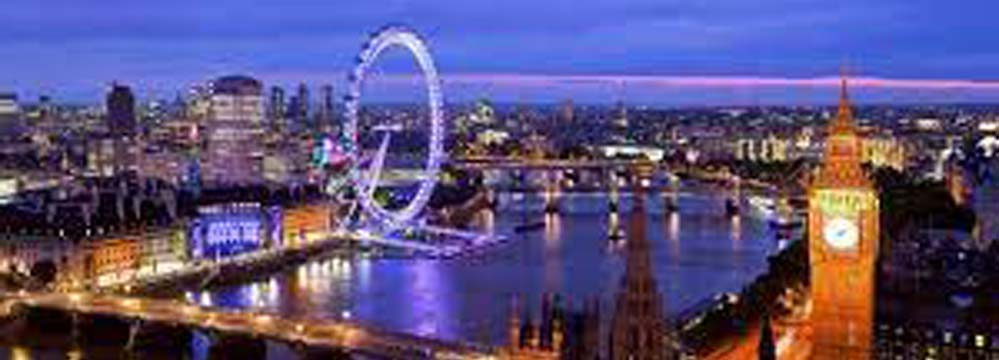
(England Twitter)-History of public transport authorities in London details the various organisations that have been responsible for the public transport network in and around London, England from 1933 until 2000 and have used the London Transport brand. Their responsibilities have encompassed the buses, coaches, trams and the London Underground. The period began with the creation of the London Passenger Transport Board, which covered the County of London and adjacent counties within a 30-mile (48-km) radius. This area later came under the control of the London Transport Executive and then the London Transport Board. The area of responsibility was reduced to that of the Greater London administrative area in 1970 when the Greater London Council, and then London Regional Transport took over responsibility. Since 2000, the Greater London Authority has been the transport authority and the executive agency has been called Transport for London; ending the 67 year use of the London Transport name.

2000 onwards: Transport for London
A replacement authority for the GLC was set up in 2000, the Greater London Authority with a transport executive called Transport for London (TfL), which took over control from 3 July 2000. It is the first London transport authority since 1933 not to be commonly called London Transport. The London Underground did not pass to TfL until after a Private Finance Initiative (PFI) agreement for maintenance was completed in 2003.

Background
Prior to 1933, the ownership and management of the transport system in London was distributed among a large number of independent and separate organisations. The Underground railway system had been developed and was owned by the Underground Electric Railways Company of London (UERL) and the Metropolitan Railway. Tram and Trolleybus networks were owned by various local authorities and public companies and buses were owned by numerous companies. Many of these services were in competition with one another leading to wasteful duplication. The London County Council managed tram operations within the County of London, but its responsibility did not extend to the bus or tram routes that ran outside its area; or to the railways, which also extended into neighbouring counties. A Royal Commission on London Government in the 1920s did not permit the London County Council to extend its area of responsibility and an ad-hoc London Traffic Area was created to regulate motor traffic in the wider London region. In the 1930s another ad-hoc solution was sought to improve the control and coordination of public transport.

Transport for London

(England Twitter)-Transport for London (TfL) is the local government body responsible for most aspects of the transport system in Greater London in England. Its role is to implement the transport strategy and to manage transport services across London. Its head office is in the Windsor House in the City of Westminster.

Organisation
TfL is organised in three main directorates and corporate services, each with responsibility for different aspects and modes of transport. The three main directorates are:
London Underground, responsible for running London's underground rail network, commonly known as the tube, and managing the provision of maintenance services by the private sector. This network is sub-divided into three service delivery units:
BCV: Bakerloo, Central, Victoria and Waterloo & City lines
JNP: Jubilee, Northern and Piccadilly lines
SSR (Sub Surface Railway): Metropolitan, District, Circle and Hammersmith & City lines
London Rail, responsible for:
Co-ordination with the operators that provide National Rail service within London.
London Overground, although actual operation is undertaken by a private sector franchisee and maintenance by Network Rail.


History
TfL was created in 2000 as part of the Greater London Authority by the Greater London Authority Act 1999. It gained most of its functions from its predecessor London Regional Transport in 2000. It did not take over responsibility for the London Underground until 2003, after the controversial Public-private partnership (PPP) contract for maintenance had been agreed. Management of the Public Carriage Office had previously been a function of the Metropolitan Police.

Alcohol ban
On 1 June 2008, the drinking of alcoholic beverages was banned on Tube and London Overground trains, buses, trams, Docklands Light Railway and all stations across London. Carrying open containers of alcohol was also banned on public transport. The Mayor of London and TfL announced the ban with the intention of providing a safer and more pleasant experience for passengers.
There were "Last Round on the Underground" parties on the night before the ban came into force. Until bylaws are altered to incorporate the ban the only enforcement action available is confiscation of the alcohol and/or ejection from the London Transport network
Docklands Light Railway: normally abbreviated DLR, this is the automatically driven light rail network in east London, although actual operation and maintenance is undertaken by a private sector franchisee.
London Trams, responsible for managing London's tram network, by contracting to private sector operators. At present the only tram system is Tramlink in south London, but others are proposed.
Surface transport, consisting of:
London Buses, responsible for managing the red bus network throughout London, largely by contracting services to private sector bus operators. Incorporating CentreComm, London Buses Command & Control Centre, a 24hour Emergency Control Centre based in Southwark.
London Dial-a-Ride, which provides paratransit services throughout London.
London River Services, responsible for licensing and coordinating passenger services on the River Thames within London.
London Streets, responsible for the management of London's strategic road network.
London congestion charge.
Public Carriage Office, responsible for licensing the famous black cabs and other private hire vehicles.
Victoria Coach Station, which owns and operates London's principal terminal for long distance bus and coach services.
Cycling Centre of Excellence, which promotes cycling in London and manages the contract with Serco for the Barclays Cycle Hire scheme
Walking, which promotes better pedestrian access.
London Road Safety Unit, which promotes safer roads through advertising and road safety measure.
Community Safety, Enforcement and Policing, responsible for tackling fare evasion on buses, delivering policing services that tackle crime and disorder on public transport in cooperation with the Metropolitan Police Service's Transport Operational Command Unit (TOCU) and the British Transport Police.
Traffic Enforcement, responsible for enforcing traffic and parking regulations on the red routes
Freight Unit, which is currently developing the "London Freight Plan" and is involved with setting up and supporting a number of Freight Quality Partnerships covering key areas of London.
Transport for London's roundels.
Each of the main units has its own corporate identity, formed by differently-coloured versions of the standard roundel logo and adding appropriate lettering across the horizontal bar. The roundel rendered in blue without any lettering represents TfL as a whole (see Transport for London logo), as well as used in situations where lettering on the roundel is not possible (such as bus receipts, where a logo is a blank roundel with the name "London Buses" to the right). The same range of colours is also used extensively in publicity and on the TfL website.


London Regional Transport

(England Twitter)-London Regional Transport (LRT) was the organisation responsible for the public transport network in Greater London, UK from 1984-2000. In common with all London transport authorities from 1933 to 2000, the public name and operational brand of the organisation was London Transport.
The organisation was created by the London Regional Transport Act 1984 and was under direct state control, reporting to the Secretary of State for Transport. It took over responsibility from the Greater London Council in 1984, two years before the GLC was formally abolished.
In 1985 London Underground Limited (LUL) was set up to manage the tube network as a wholly owned subsidiary of London Regional Transport. In 1985 the operation of some bus services was put out to tender for the first time and, for a number of years, buses bearing a variety of different colour-schemes operated alongside those still operating in the traditional red livery. The variety of liveries was found to be confusing to tourists and non-Londoners expecting to find red-painted buses and, after lobbying from the tourist board, it became a requirement when contracts were retendered that bus liveries must be predominately red. Upon privatisation of the main line railways, the Waterloo & City Line passed to the London Underground and LRT management in 1994.
LRT was responsible for some modifications to the fare system, including inclusion of the separately managed British Rail services. In January 1985 the Capitalcard season ticket was launched, offering validity on British Rail as well as London Underground and London Buses. It was priced around 10-15% higher than the Travelcard. In June 1986 the One Day Capitalcard was launched. The Capitalcard brand ended in January 1989 when the Travelcard gained validity on British Rail. In January 1991 Zone 5 was split to create a new Zone 6. The Docklands Light Railway was opened on 31 August 1987 and was included in the zonal Travelcard ticketing scheme.
LRT remained in control of public transport in London until 2000 when Transport for London, an agency of the newly-created Greater London Authority took over responsibility under the Greater London Authority Act 1999.

Thursday, May 5, 2011

Rain helps dampen heathland fires

(England Twitter)-Fires have raged in Swinley Forest, near Ascot and Bracknell, since Monday.

Berkshire fire service had crews in 10 engines working at the site overnight but scaled up resources to 100 firefighters in 20 engines at 0500 BST.

Royal Berkshire Fire and Rescue Service is still tackling heathland fires which broke out in the Swinley Forest area earlier in the week, but crews across the rest of the UK seem to have tamed the majority of blazes.

Some of the many fires that have raged in tinder dry countryside across the nation for the past week are thought to have been started deliberately.

Dry peat has been burning underground and about 200 firefighters from seven county forces have been using hoses to dampen down "hot spots" over 300 hectares (740 acres).

The fire service said torrential rainfall was needed for about a week "without stopping" for the fire to be put out.

Lancashire Fire Service said almost all the moorland fires have now been extinguished, but firefighters are still at the location of two blazes. A fire service spokesman said five appliances are at a fire in Belmont which started last Friday, while one team of firefighters is making sure a blaze at Simonswood did not reignite.

About 200 firefighters from seven counties have been involved in tackling the fires near Ascot and dampening down hot-spots.

 In Lancashire moorland fires have occupied the crews of 32 of the county's 39 fire stations for the best part of a week.

The Swinley Forest fire has affected 300 hectares of land since Monday afternoon and destroyed at least 40 hectares.

Monday, January 31, 2011

Cargo aircraft

Antonov An-225: the largest cargo aircraft.
Lockheed C-5 Galaxy
A large military transport aircraft: the Boeing C-17A Globemaster III
A Bristol Freighter from the 1960s, with front opening clamshell doors and flight deck bulge
The Boeing 747 Large Cargo Freighter 'Dreamlifter'

A cargo aircraft (also known as freight aircraft or freighter) is a fixed-wing aircraft designed or converted for the carriage of goods, rather than passengers. They are usually devoid of passenger amenities, and generally feature one or more large doors for the loading and unloading of cargo. Freighters may be operated by civil passenger or cargo airlines, by private individuals or by the armed forces of individual countries. However most air freight is carried in special ULD containers in the cargo holds of passenger aircraft.
Aircraft designed for cargo flight use have a number of features that distinguish them from conventional passenger aircraft: a "fat" looking fuselage, a high-wing to allow the cargo area to sit near the ground, a large number of wheels to allow it to land at unprepared locations, and a high-mounted tail to allow cargo to be driven directly into and off the aircraft.

History

Aircraft were put to use carrying cargo in the form of air mail as early as 1911. Although the earliest aircraft were not designed primarily as cargo carriers, by the mid 1920s aircraft manufacturers were designing and building dedicated cargo aircraft.
The earliest "true" cargo aircraft is arguably the World War II German design, the Arado Ar 232. The Ar 232 was intended to supplant the earlier Junkers Ju 52 freighter conversions, but only small numbers were built. Most other forces used freighter versions of airliners in the cargo role as well, most notably the C-47 Skytrain version of the Douglas DC-3, which served with practically every allied nation. Post war Europe also served to play a major role in the development of the modern air cargo and air freight industry during what became known as the "Cold War." It is during the Berlin Airlift at the height of this "Cold War," when a massive mobilization of aircraft was undertaken by the "free world," to supply West Berlin residents with food and supplies, in a virtual around the clock air bridge; after the Soviet Union closed and blockaded Berlin's borders, and land links to the west.
In the years following the war era a number of new custom-built cargo aircraft were introduced, often including some "experimental" features. For instance, the US's C-82 Packet featured a removable cargo area, while the C-123 Provider introduced the now-common upswept tail with a drop-down loading and unloading ramp. But it was the introduction of the turboprop that allowed the class to mature, and even one of its earliest examples, the C-130 Hercules, is still the yardstick against which newer military transport aircraft designs are measured.

Today

Most conversions are carried out on older aircraft no longer suitable for passenger use, often due to changing safety or noise requirements, or when the aircraft type is considered to have become uncompetitive in passenger airline service, but there is also a market for new-build freighter designs. Freighter aircraft normally have strengthened cabin floors and the inclusion of a broad top-hinged door on the port fuselage in addition to an absence of passenger cabin windows which are "plugged."
The Boeing 747 can be ordered in a freighter version with a large nose door which could be raised above the cockpit for loading. The bulged top deck housing the cockpit was originally designed to allow an unobstructed main deck, and to keep cargo from crushing the pilots in the case of an accident. The interior size of the fuselage is matched to the size of a standard shipping container, stacked two high and two wide.
Other types of specialized civilian cargo aircraft configurations, include the swing-tail Canadair CL-44 and Boeing 747 Large Cargo Freighter, and the clamshell tail CASA CN-235.

Examples

Early Air mail and airlift logistics aircraft
The Type 158 York ,.

Important "airlift and logistics;" "cargo-liners," "mail-liners," and "mail aircraft."
Avro Lancastrian (Transatlantic mail)
Avro York (Berlin Airlift)
Boeing C-7000
Curtiss JN-4
Douglas M-2

Air India Airbus A310-304
Cargolux Boeing 747-400F
Aeroflot Il-76TD


Aero Spacelines Super Guppy
Airbus A300
Airbus A310
Airbus A320 (Conversions)
Airbus A330
Airbus A380F
Airbus Beluga
Antonov An-124
Antonov An-225 (the largest and heaviest aircraft in the world)
Boeing 727
Boeing 737 (Conversions)
Boeing 757
Boeing 767
Boeing 747 Freighter
Boeing 747 Large Cargo Freighter (Dreamlifter)
Boeing 777 Freighter
Douglas DC-3
Douglas DC-9
Ilyushin Il-76
Ilyushin Il-96
McDonnell Douglas DC-10
McDonnell Douglas MD-11
Tupolev Tu-204

Light aircraft
Cessna Caravan - freight door and belly pod equipped
Shorts 330 - drop ramp and twin tailed vertical stabilizer

Military cargo aircraft


A turboprop twin-engined transport aircraft: the Antonov An-32
 Military transport aircraft

Experimental cargo aircraft
Hughes H-4 Hercules ("Spruce Goose")
Lockheed R6V Constitution
LTV XC-142

Comparisons

Aircraft
Cargo Volume
Cargo Mass
Cruise Speed
Maximum Range
Aircraft Category
Airbus A400M
-
37,000 kg (82,000 lb)
780 km/h ( 420 kn; 480 mph)
6,390 km (3,450 nm)
Military
Airbus 330-200F
475 m3
-
871 km/h (537 mph)
7,400 km (4,000 nm, 4,600 mi)
Commercial
Airbus Beluga
1210 m3
47,000 kg
-
4,632 km (2500 nm)
Commercial
Antonov 124
-
150,000 kg (330,000 lb)
800 km/h (430 kn, 490 mph)
5,400 km (2,900 nm, 3,360 mi)
Military & Commercial
Antonov 225
1,300 m3 (46,000 cu ft))
250,000 kg (550,000 lb)
800 km/h (430 kn, 500 mph)
15,400 km (9,570 mi)
Commercial
Boeing 747-8F
854.5 m3 (30,177 cu ft)
134,200 kg (295,800 lb)
908 km/h (490 kn, 564 mph)
-
Commercial
Lockheed C-5 (Galaxy)
-
122,470 kg (270,000 lb)
919 km/h
4,440 km (2,400 nmi; 2,760 mi)
Military
Lockheed C-130H (Hercules)
-
33,000 kg (72,000 lb)
540 km/h (292 kn, 336 mph)
3,800 km (2,050 nm, 2,360 mi)
Military


(source:wikipedia)

Antonov An-225

An-225 Mriya
The Antonov-225 at Hostomel Airport (Antonov airport),Ukrain

:
The Antonov An-225 Mriya (Ukrainian: Антонов Ан-225 Мрія, Russian: Антонов Ан-225 Мрия, Dream, NATO reporting name: 'Cossack') is a strategic airlift cargo aircraft, designed by the Antonov Design Bureau in the 1980s. It is the world's heaviest fixed-wing aircraft. The design, built to transport the Buran orbiter, was an enlargement of the successful An-124 Ruslan. The An-225's name, Mriya (Мрiя) means "Dream" (Inspiration) in Ukrainian.
One An-225 was completed in 1988 and a second An-225 has been partially completed. The one An-225 is in commercial operation carrying oversized payloads.


Development
Space shuttle Buran being carried by the An-225 ,.
The Antonov An-225 was designed for the Soviet space program as a replacement for the Myasishchev VM-T. Able to airlift the Energia rocket's boosters and the Buran space shuttle, its mission and objectives are almost identical to that of the United States' Shuttle Carrier Aircraft.
The An-225 first flew on 21 December 1988. The aircraft was on static display at the Paris Air Show in 1989 and it flew during the public days at the Farnborough air show in 1990. Two aircraft were ordered, but only one An-225 (tail number UR-82060) was finished. It can carry ultra-heavy and oversize freight, up to 250,000 kg (550,000 lb) internally, or 200,000 kg (440,000 lb) on the upper fuselage. Cargo on the upper fuselage can be 70 metres (230 ft) long.
A second An-225 was partially built during the late 1980s for the Soviet space program. The second An-225 included a rear cargo door and a redesigned tail with a single vertical stabilizer. It was planned to be more effective for cargo transportation.Following the collapse of the Soviet Union in 1991 and the cancellation of the Buran space program, the lone operational An-225 was placed in storage in 1994. The six Ivchenko Progress engines were removed for use on An-124s, and the second uncompleted An-225 airframe was also stored. The first An-225 was later re-engined and put into service.
By 2000, the need for additional An-225 capacity had become apparent, so the decision was made in September 2006 to complete the second An-225. The second airframe was scheduled for completion around 2008, then delayed. By August 2009, the aircraft had not been completed and work had been abandoned.

Design
An-225 main landing gear ,.
Based on Antonov's earlier An-124, the An-225 has fuselage barrel extensions added fore and aft of the wings, which received root extensions to increase span. Two more Ivchenko Progress D-18T turbofan engines were added to the new wing roots, bringing the total to six, and an increased-capacity landing gear system with 32 wheels was designed. The An-124’s rear cargo door and ramp were removed to save weight, and the empennage was changed from a single vertical stabilizer to a twin tail with an oversized horizontal stabilizer. The twin tail was essential to enable the plane to carry large, heavy external loads that would disturb the aerodynamics of a conventional tail. Unlike the An-124, the An-225 was not intended for tactical airlifting and is not designed for short-field operation.
An-225 Ivchenko Progress D-18T turbofan engines ,.
Initially the 225 had a maximum gross weight of 600 tonnes (1,320,000 lb) but the aircraft was modified in 2000-01, at a cost of US$20M, with a reinforced floor that increased the maximum gross weight to 640 tonnes (1,410,000 lb).
Both the earlier and later takeoff weights establish the An-225 as the world's heaviest aircraft, being heavier than the double-decker Airbus A380 even though Airbus plans to pass the An-225's maximum landing weight with 591.7 tonnes (1,304,000 lb) for the A380. The Hughes H-4 Hercules, known as the "Spruce Goose", had a greater wingspan and a greater overall height, but was 20% shorter, and due to the materials used in its construction, also lighter. In addition, the Hercules only flew once, making the An-225 the largest aircraft in the world to fly multiple times. The An-225 is larger than the Airbus A380 airliner, and also bigger than the Antonov An-124, Boeing 747 Large Cargo Freighter, and Lockheed C-5 Galaxy, the nearest equivalent heavy cargo aircraft.

Operational history
The An-225 at the 38th Paris International Air and Space Show in 1989 ,.
In the late 1980s, efforts were begun by the Soviet government to generate revenue from its military assets. In 1989, a holding company was set up by the Antonov Design Bureau as a heavy airlift shipping corporation under the name "Antonov Airlines", based in Kiev, Ukraine and operating from London Luton Airport in partnership with Air Foyle HeavyLift.
As the Soviet space program was in its last years, the An-225 was considered and accepted to be the prime way to transport the Buran Shuttle.
The company initiated operations with a fleet of four An-124-100s and three Antonov An-12s, but by the late 1990s a need for aircraft larger than the An-124 became apparent. In response, the original An-225 was re-engined, modified for heavy cargo transport, and placed back in service under the management of Antonov Airlines.
Antonov An-225 at Manchester Airport in 2006 ,.
On 23 May 2001, the An-225 received its type certificate from the Interstate Aviation Committee Aviation Register (IAC AR). In September 2001, carrying 4 main battle tanks at a record load of 253.82 tonnes (279.79 short tons) of cargo, the An-225 flew at an altitude of 2 km (6,600 ft) over a closed circuit of 1,000 km (620 mi) at a speed of 763.2 km/h (474.2 mph).
The type's first flight in commercial service departed from Stuttgart, Germany on 3 January 2002, and flew to Thumrait, Oman with 216,000 prepared meals for American military personnel based in the region. This vast number of ready meals was transported on some 375 pallets and weighed 187.5 tons.
The An-225 has since become the workhorse of the Antonov Airlines fleet, transporting objects once thought impossible to move by air, such as locomotives and 150-ton generators. It has become an asset to international relief organizations for its ability to quickly transport huge quantities of emergency supplies during disaster relief operations.
An-225 doing a fly-by ,.
Beginning in June 2003, the An-225, along with An-124s, delivered over 800 tons of equipment to aid humanitarian efforts in Iraq.
The An-225 has also been contracted by the Canadian and U.S. governments to transport military supplies to the Middle East in support of Coalition forces. In November 2004, FAI placed the An-225 in the Guinness Book of Records for its 240 records.
On 11 August 2009, the heaviest single cargo item ever sent via air freight was loaded onto an Antonov 225. At 16.23 metres (53.2 ft) long and 4.27 metres (14.0 ft) wide, the consignment–a generator for a gas power plant in Armenia and its loading frame–weighed in at a record 189.09 tonnes (416,900 lb). Also during 2009, the An-225 was painted in a new blue and yellow paint scheme,after Antonov ceased cooperation with AirFoyle and partnered with Volga-Dnepr in 2006.
Antonov An-225 in 2010 ,.

In February 2010, the An-225 transported 108 tonnes of construction machinery from Japan to Santo Domingo, Dominican Republic for quake-stricken Haiti.
On 11 June 2010, the An-225 carried the world's longest piece of air cargo, when it flew two new 42-meter wind turbine blades (test subjects) from Tianjin, China to Denmark.
An example of the cost of shipping cargo by An-225 was €266,000 for flying a chimney duct from Denmark to Kazakhstan in 2008.

Operators

Ukraine
Antonov Airlines

Former operators
Soviet Union
Soviet space program

Specifications (An-225)


A size comparison between four of the largest aircraft, the An-225 (green), the Hughes H-4 Hercules (gold), the Boeing 747-8 (blue), and the Airbus A380-800 (pink).
Data from Vectorsite, Antonov's Heavy Transports
General characteristics
Crew: 6
Payload: 250,000 kg (550,000 lb)
Door dimensions: 440 x 640 cm (14.4 x 21 ft)
Length: 84 m (275.6 ft)
Wingspan: 88.4 m (290 ft 2 in)
Height: 18.1 m (59.3 ft)
Wing area: 905 m2 (9,743.7 ft2))
Aspect ratio: 8.6
Cargo Volume: 1,300 m3 (46,000 cu ft)
Empty weight: 285,000 kg (628,315 lb)
Max takeoff weight: 640,000 kg (1,323,000 lb)
Powerplant: 6× ZMKB Progress D-18 turbofans, 229.5 kN (51,600 lbf) each
Takeoff run: 3,500 m (11,500 ft) with maximum payload
Performance
Maximum speed: 850 km/h (460 knots, 530 mph)
Cruise speed: 800 km/h (430 knots, 500 mph)
Range:
With maximum fuel: 15,400 km (9,570 mi)
With maximum payload: 4,000 km (2,500 mi))
Service ceiling: 11,000 m (36,100 ft)
Wing loading: 662.9 kg/m² (135.5 lb/ft²)
Thrust/weight: 0.234


(source:wikipedia)
New Easy ad campaign name for Godaddy is all about Domains & Hostings just ez2.me:Next time for Go Daddy.com: Easy to you just www.ez2.me
Get Your Web Presence on the Right Track. .Com's for just $7.99!
Look more Products from Go daddy just log on
all about Domains & Hostings just ez2.me